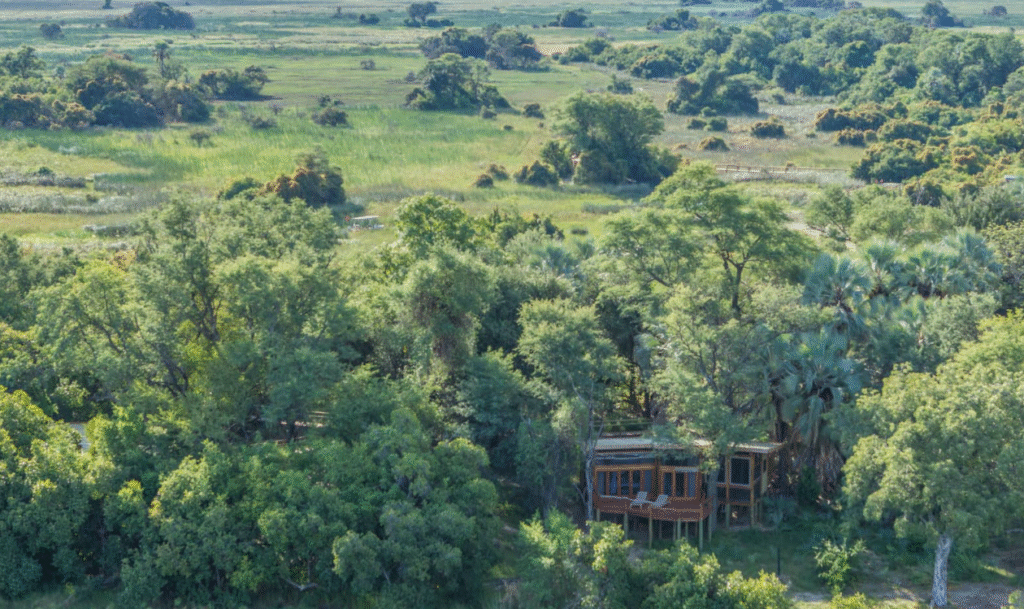
The Okavango Delta is one of Africa’s most distinctive wilderness landscapes. Water flowing from the Angolan highlands spreads across the sands of the Kalahari, creating a shifting mosaic of channels, lagoons, reed beds, floodplains, islands and dry woodland rather than continuing to the sea.
Water and wilderness
The Delta’s great appeal is variety. Depending on the location and season, days may include mokoro excursions through shallow channels, motorboat journeys, open-vehicle game drives and guided walks. Permanent waterways sit alongside seasonal floodplains and substantial areas of dry land, supporting elephant, buffalo, hippo, antelope and an impressive range of predators and birdlife.
Choosing where to stay
No single camp represents the entire Okavango. Some areas are primarily water-focused, while others offer outstanding vehicle-based game viewing. Private concessions can also provide activities such as night drives and carefully managed off-road viewing. Combining contrasting camps is often the best way to understand the Delta properly.
When to travel
The annual flood often expands the waterways during Botswana’s dry season, while the summer rains transform the landscape into vivid green country rich in birdlife and newborn animals. Water levels vary between years, so camp location matters as much as the month of travel.